Friday, 28 February 2014

The Uncouth Gentlemen

Cricket is a sport which is very religiously followed in India. Though on the world level, the sport is not that popular and is played by a very few countries yet the competitive spirit that is involved in the game is intense. Earlier, cricket was a rich man’s game and only the gentlemen who could afford the sport would indulge in playing it. The realms of this monotony were broken overtime as the players from the other strata of the society gradually took cricket beyond the epithet of ‘A gentleman’s game’.
The recent incidents that have surfaced show a very different side of the cricketers which is not something we are unfamiliar with, but as many as three incidents on the world stage in less than a week’s time is alarming but there is always a much bigger story behind cricketers resorting to such measures which goes unnoticed.
The first incident involved the Indian fast bowler Ishant Sharma, who was caught mouthing tirades on the stump microphone. The recipient of those gruesome abuses from Ishant is a mystery where a part of the media claimed it was Zaheer Khan who was cursed while the other part claimed it was Brendon McCullum.
It was during the 2nd Test match between India and New Zealand – When Ishant bowled a delivery towards the leg stump, McCullum flicked the ball and took 2 runs, it was Zaheer Khan who very lazily got to the ball on the field. Ishant was caught using abusive language on the microphone while going back to his run-up. It is a possibility that he cursed Zaheer, who was slow to get to the ball and it is a possibility that he abused McCullum who was earlier dropped by him of his own bowling.
There is also a third side to it as well which no one mentioned, whenever we are frustrated by ourselves we tend to have an intra-personal talk. Ishant was wicket-less in the 2nd innings after taking 6 in the 1st, he himself was the reason behind McCullum being at the crease for so long and while pressing hard to take wickets he bowled a loose delivery on the pads which gave away easy runs. We cannot rule out the possibility that he was using those expletive words for himself to indict his poor delivery.
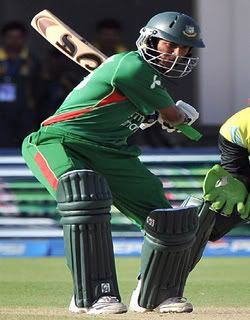
The second incident involved the Bangladeshi all-rounder Shakib-al-Hasan who was banned for 3 matches for using objectionable gestures on camera. The commentators during the recent Bangladesh-Sri Lanka ODI, were discussing Shakib’s bad form and the screen at the stadium showed Shakib getting out in the recent matches, the cameraman then pointed the camera towards the Bangladeshi dressing room and Shakib responded by holding his crotch. Again this is something which is unacceptable but Shakib has been out of form for a long time and scrutinizing someone’s bad form on big screens in front of his home crowd and then pointing the camera towards him would only infuriate the player.
The third incident involved the U19 Indian skipper Vijay Zol who was suspended for one match due to him being aggressive and using offensive language to an English player during the quarter-final match at the U-19 World Cup in the UAE. India was on the back foot and there is a possibility that the Indian skipper was provoked by the English batsman earlier but the ICC code of conduct takes into account only hardcore evidences.
There is a decorum that is to be maintained once a player enters the field and the level of competition involved in sports around the world invite aggression from them. All the sports around the globe have seen rivalries and the result of those rivalries have been this uncouth behavior on the field.
The difference is in dealing with the offences. Where games like Football and Hockey are usually lenient on small verbal fights that originate out of aggression, cricket is stricter on that front yet all of these sports take in notice only one side of the story.
One example is the famous incident involving Zidane and Materazzi during the FIFA world cup final of 2006, where Zidane’s head butt was reprimanded by showing him a red card while Materazzi’s instigation to Zidane’s actions were only scrutinized in the media and not officially. This is one of the loop-hole with the laws that these sports have regarding such incidents.
The archaic laws that only indicts a person caught by the camera is farcical, there is a much bigger picture that is off it. Take the Monkeygate incident between Harbhajan Singh and Andrew Symonds in 2008 where the provocation to Harbhajan Singh was pumped by Symonds into using the racial statement (If he used any) and only Singh was penalized for the offence.
Surely these incidents are unacceptable and the person indulging in such behavior should be punished but the problem is in the way sports authorities deal with these incidents. As there are two sides of a coin, there is always another side to the story and before taking harsh decisions on these uncouth gentlemen these authorities should take in notice that other side.


Thursday, 27 February 2014

The quintessential wingmen

Australia, after facing heart-breaking defeats in India and England last year, bounced back like a warrior and re-gained their most coveted trophy in test cricket, The Ashes. They carried on their good form and defeated the Numero-Uno Test side South Africa in their own backyard and took a 1-0 lead in the 3 Test series. Statistically, Mitchell Johnson was the one player who contributed heavily in Australia’s triumph with 37 wickets in 5 tests during The Ashes and 12 wickets in the first test against South Africa but the credit for these wins cannot be given to this fast bowler alone.
He was aided by the two equally skilled bowlers at the other end who laid the foundation for Johnson to so comprehensively exploit the opposition. Peter Siddle and Ryan Harris in this scenario were the quintessential wingmen to Mitchell Johnson, helping him get those 49 wickets with ease.
What is a wingman?
He is a pilot whose aircraft is positioned behind and outside the leading aircraft in a formation. In colloquial terms a wingman is a person who helps his friend usually from the outside to successfully perform a task. The term was made more famous by the popular sit-com ‘How I met your mother’, where the protagonist’s friends become the wingmen to help him get his way with girls at a bar. Coming back to the argument, if we abide to the definition of a wingman and apply it to the recent matches where Johnson has destroyed the opponents, we will find Siddle and Harris playing the role of a wingman.
Bowling at an average speed of above 140, Mitchell Johnson is known to intimidate the batsman and recently he has been converting those intimidating deliveries into wicket taking ones as well. But he has been in the team for a very long time and was known to be inconsistent and the one who would squander runs but get a few wickets to neutralize that. What is the difference in style of a bowler that would turn his fortunes completely so soon?
Apparently none, Mitchell Johnson is still bowling with the same action, a bit unorthodox and round arm which technically makes it difficult for a bowler to stick to one line throughout his spell, which he still doesn’t. The difference has been the assistance he is getting from the other end. Peter Siddle is one of finest bowlers today; he has the ability to swing the ball while his USP is his consistency to bowl at one spot.
His recent statistics would cast doubt in the minds of the follower for a moment but then again a wingman does what he does not to get credit for it. He along with Ryan Harris put pressure on the batsman by bowling at one spot and restraint the runs. One occasional delivery would be short while most of them would be at good length. When Johnson comes to bowl from the other end, hetricks the batsman with his pitched up deliveries and the tethered batsman sees an opportunity to score runs. The result of which is what we call the 49 wickets in 6 test matches.
This tactic of curbing runs from one end and attacking from the other is not new to cricket, it is something that has been tried and tested and has won many games for teams. This became the difference between South Africa and Australia in the 1st Test where Australia had two bowlers playing a role of a wingman and one going all out to annihilate, South Africa’s bowlers had other tactics. Dale Steyn and MorneMorkel being the senior players have a role in the team to pick up wickets but the role of a wingman is not assigned to anybody.
Even Vernon Philander and Ryan McLaren try to go for the kill while bowling. When going for the kill the one thing which they miss out is that they don’t want to stick to one spot and stop the flow of runs. They try and experiment to find the weak spot of the batsman and get him out, which is a tactic that would work wonders against a team like India who faces troubles playing fast bowling on pitches outside the sub-continent but with teams like Australia who are playing on conditions akin to home, the tactic has to change and someone has to take up the role of a wingman and work covertly towards the success.
There is no doubt about the ability of Mitchell Johnson, but the reason why he was inconsistent earlier was because he was expected to play the role of a wingman in a team where Brett Lee was the protagonist and Johnson’s style of bowling is just not suited for that job. Now that he has found the perfect opportunity to openly bowl with his unconventional slingshot action, his success should not be credited to him alone, the people who demand no reward for playing a role that goes unnoticed by the naked eye should also be applauded. After-all even if the bowler gets a lot of wickets from one end it is also because of the pressure put by the wingman at the other end and without hesitation I would call these wingman the undercover agent of the cricket world, who render their services without accreditation.

Monday, 24 February 2014

Reaping what has been sowed: Mentoring the future

At the initial stages of the career of any professional in any field, guidance becomes a necessity. The need for a person that would walk them through the tough stages of their career, show them the illuminated path and then vicariously enjoy the success of that person. We call this person a mentor. Accept it or not but a mentor plays an important part in shaping an individual’s life and an even more vital part when the person is down and out and Cricket is no different from any other profession that exists on this planet.
There is a saying in the world of cricket, ‘You can take the cricketer out of cricket but not the cricket out of the cricketer’. As confusing as that may sound, the plausibility of this statement is being proved by legends of Indian cricket, Rahul Dravid, Sachin Tendulkar, VVS Laxman and Sourav Ganguly. These 4 stalwarts of Indian cricket have played a major part of their spectacular careers together and took Indian cricket to new heights while they were serving the nation. Now that they have retired, the cricketer inside them has turned into a mentor and the purpose of them remains the same only the mode of it has changed.
In the case of Sourav Ganguly, it can be said that he was a mentor from the time he took over the captaincy of the Indian side. In my list, this places him a touch above the others because of him playing three roles at one time, a player, a captain and a mentor. Ace cricketers like Harbhajan Singh, Virender Sehwag, Yuvraj Singh and Zaheer Khan are known to the world of cricket because of the faith imparted on them by Ganguly. During his reign, Ganguly relied on youngsters and the team did achieve a lot of success then. Some cricketers like, Mohd. Kaif missed the bus to fame but Ganguly left no stone unturned to make it easier for Kaif.
Recently, Sachin Tendulkar decided to mentor 11 cricketers but that sounded more like a promotional activity by Adidas where he was to mentor young cricketers signed by sports apparel giant, which had names such as Parvez Rasool, Unmukt Chand, Manan Vohra, Vijay Zol and many more. Imagine the jubilance on these youngsters if Sachin mentors them to show them the way in their careers.
Rahul Dravid has been known to nurture many young talents since the time he had rested his sword from the international level. Players like Ajinkya Rahane, Sanju Samson, and Stuart Binny all have been a part of the Rajasthan Royals and blossomed under the guidance of Rahul Dravid. By retaining these 3 during this year’s IPL, Dravid has shown that he will continue to bestow faith upon them. The pattern with which Rajasthan Royals bought players during the IPL also showed that they want to give exposure to many young cricketers at the top-most level. Buying Unmukt Chand, Ankush Bains, Deepak Hooda, Rahul Tewatia, Ankit Sharma and others proved their intent.
VVS Laxman, though has not come out openly with regard to mentoring any player, but the players after which he went during the IPL auction was a testament to his intentions about contributing towards Indian cricket covertly. KL Rahul, Karan Sharma, Manpreet Juneja, Ricky Bhui and Chama Milind are some of the young cricketers bought by SunRisers who can be the stars of the future.
Adhering to the statement above, these cricketers can never be taken out of the game; they will find a way to mentor these cricketers. When we talk about Yuvraj or Harbhajan or any cricketer mentored by Ganguly, we remember the time when he promoted these cricketers to get them to a stage where they are now. Rahane recently dedicated his maiden test century to Rahul Dravid for he said that without him it would have been difficult scoring runs.
When the going gets tough, the tough gets going but to pick up that tough person from the dust when the tough going nails him down, a person whom we call a mentor steps up and lends a shoulder to help the tough to get going.

Thursday, 20 February 2014

Question everything

We are taught to question everything before believing in them. No matter how incontrovertible the statement might be, we are told to question it till our inner-self is completely satisfied.
Then why aren't we allowed to question religion? 
A 10 year old boy oblivious from the various traditions and beliefs that pervade in the society is perplexed by the atrocities he witnessed around him, questions his Father.

SON: Why do you want me to go there? The snake around the neck of that blue man terrifies me. We have to go there barefoot and the floor is hot, it hurts me.

FATHER: You barely know how to talk and you are disrespecting your own God? 

SON: My God? No one gave me a chance to choose my God, I don't like the God you take me to. I like the one with an elephant head and even that lady sitting on a lion. I like lions daddy.

FATHER: You are a Hindu, all these Gods are same, If you want we can go to the temple you like.

SON: So we can go to that place where people wear small caps on their heads? I always wanted to meet the person who wakes me up every morning with his singing. I will tell him to lower his volume, I want to sleep more till my vacations end.

FATHER: Please God forgive this child. They are muslims. They are not our people, their God is different.

SON: But daddy you just said that all these Gods are same.

FATHER (completely vexed): Leave it, go get ready we are going to the Temple we went yesterday.

SON: I do not want to go there, I hate that place. They do not let didi and mumma enter and they berate me for eating from my left hand. I won't go there. What is wrong with both of them that they do not let them in and I can't eat from my right, how is it my fault? 

FATHER (slaps him): You adamant child, you want to change how this world has been functioning till now? Go to your room.
 
SON (crying): But I don't like the way it works.

This is the harsh reality of our society. We are not given an option to choose our God, our God is the one our Family has been following since inception. Religions create divides as well, be it inter-religion or intra-religion, divides do exist. 
Religion divides a human into Hindu, Muslim, Sikh, Christian, Jew etc. while the divisions that are intra-religion are more farcical. A division between a right handed person and a left handed person where the left handed person is a sinister. A division between menstruating females and non-menstruating male where menstruating females are considered dirty. How is it a person's fault when she eats from her left or she menstruates? 
We are also told that God has created everything that is there in the world. Then if that is true then the left handers, menstruating females, low caste people all are created by him. If people consider these factions as outcasts of the society then it is proven that God is not the almighty, he has made copious amount of mistakes.
These atrocities I witness around me makes me more sure that in order to find God the only place I do not have to look for are these religions. People refuse to question anything dubious in their own religion. Why? When we clearly can find loopholes in them why is it difficult for them to question that. May be that would tarnish the pristine reputation of their religion but if there are loopholes how can it be pristine?
Next time, question everything that you are told to do moreover question yourself when you discriminate because of a caste because everyone is created by God ergo we all belong to that one caste.
THINK!!!!!! 

Tuesday, 18 February 2014

The grapes that turned sour: The dilemma behind Rohit Sharma’s form overseas

The pitches in India were oblivion of the performance of Rohit Sharma outside India and vice-versa, which gave rise to an argument between the two.
INDIA (IN): Rohit Sharma has a knack to score runs and he delivers each time that he comes out to bat. He is currently one of the best batsmen in the world.
OUTSIDE INDIA (OUT): Who is Rohit Sharma?
IN: Excuse me?
OUT: I have a very short-lived memory, I remember people who perform and erase the others from my mind.
IN: But how can you not know Rohit Sharma? He only recently amassed the highest number of runs by an individual in a bilateral series against Australia and also has an ODI double century.
OUT: I thought only I believe in opening my argument with a joke, I am certainly not alone.
IN: Joke? What kind of a pitch makes fun of a great batsman? He scored a century on his Test debut and then followed it up with another – A true gem for India.
OUT:  I really want to believe you but he has been playing ODIs on me for a very long time and has only 1 hundred against his name. He started playing Test matches on me in December 2013 in South Africa. In the 7 innings that he has played in Tests he averages only 19 and for the 6+ years that he has been playing ODIs here, his average is a mere 27. How are these traits of a great batsman?
IN: This is a complete shock for me and I would refrain myself from believing it. I have seen him go berserk on the opponents many times. His excellent stroke play, his impeccable timing, his grace in every shot has won India many matches and I am sure he is doing the same on pitches like you.
OUT: On pitches like me the opponents strangle him down, there is minimal stroke play and the timings on the edge of the bat are surely impeccable. I heard the pitches from England talk about his good batting during the Champions trophy but during that time of the year, the genre of the English pitches are different from mine. They get a bit easy to bat on.
IN: I still don’t believe you, you told me the same thing about Raina before, and do you think these guys would have problems playing there?
OUT:I don’t think – I know that they face problems plain here and I really like to show-off players who perform well but Rohit is far away from that list.
This hypothetical conversation between two different types of pitches was to give you a brief idea about the reason Rohit Sharma is being made the center of attention. As a batsman, he has a dual personality. One is activated when he plays in India and does not allow the critique graphs go negative while the other one gets into action outside India where he looks clueless to the swinging deliveries.
His inconsistency was the reason for his failure to secure a permanent spot in the squad. It was after last year’s IPL that he was selected into the team and was introduced as an opener in the Champions Trophy from where he never looked back. His performance led to his Test debut but most of his big scores were in India. The alarming situation arrived when he failed abroad and was even out at 0 in the 1st innings of the 2nd Test.
Rohit Sharma is an exceptional talent but his talent will last long only after he finds a solution to the fast swinging deliveries. The grapes which were cultivated last year in India by Rohit are turning sour as he fails to deliver after each innings. With the Asia cup lined up next at Bangladesh, Rohit’s scintillating form will return.

Monday, 17 February 2014

Make it count...

We all cry over the problems we go through in life, cry simply because they exist in our lives. There are 7 billion people in this world, 7 billion different kinds of problems. Some are waiting for a miracle, some waiting for others to step in for them. Some are taking their last breath, some looking for a reason to take some more. Some are in despair for not getting what they desired, some are satisfied with modicum of everything. 
Amidst these soldiers are a few warriors who in-spite of bleeding in the battles fight their way out to win the wars, their wars. 
We all have our own battles in life, we fight them every second of the day but among those 7 billion different stories in the world there is ONE that inspires us, the one that resuscitates our soul, the one that breaks the barriers of despondency, the one that makes sure we win our battles so that we succeed in the wars we fight with life.
We all have that one story of struggle that motivates us, out of the 6,999,999,999 we all choose that one. The choice is ours we might make our struggle motivating, face our problems as to inspire that one person out of 7 billion or leave that person with 6,999,999,999 stories to choose from except ours....
The choice is ours, it always was, it will always be......

Saturday, 15 February 2014

Australia vs. South Africa: The Litmus Test

Australia is now in South Africa to play a 3 test series followed by 3 T20s but the importance of the series has waned as South Africa seems to have the better arsenal than Australia which takes away the essence of an Aus-SA series. The minuscule crowd present at the ground on Day 1 of the 1st Test match tells us about the thoughts pervading among the fans in South Africa regarding this contest. More than a gruesome battle between the two rivals, this series might just be a litmus test for the re-building Australian side to test themselves against the best side in Test cricket in foreign conditions.
The Australians are still high on their 5-0 Ashes whitewash but that was at home and against a side struggling with form coupled with internal issues. This is against a side that is dominating world cricket currently by crushing their opponents not only at home but also away from it. The record for this Australian side, away from home is dismal. Last year they suffered a white-wash in India and then lost their Ashes campaign in England convincingly.
Apart from Michael Clarke, the Australian batting line-up looks a touch hollow. Though Chris Rogers and David Warner have been in good form, they have not yet shown their ability to score big runs against good quality attack like South Africa’s. Shaun Marsh’s presence in the middle order does give strength to it but his reputation as a batsman is restricted to the limited overs scenario. He is yet to prove his talent as a test batsman. Shane Watson’s exclusion from the 1st Test due to an injury makes the batting order even weaker. It will be a test for this team to tackle the likes of Steyn, Morkel and Philander, the best in this business.
When it comes to analyzing the bowling of this team, it is no less than a worry for the team. Ryan Harris has been an average bowler for them and has been ineffective with the old ball while the problem of finding the perfect replacement for Shane Warne still persists. Nathan Lyon has done better than the other spinners that have been tried in this team but his monotonous bowling is not the solution to the worries of this team longing for a spinner.
The star of the recently concluded Ashes series, Mitchell Johnson has been inconsistent throughout his career. His 37 wickets in 5 Tests was the only time that he has shown consistency during his career and all the eyes would be on him to perform on bouncy South African tracks which aids his type of bowling. Peter Siddle is the only bowler for Australia who has been consistent and that is the reason for him being in the squad more often than the others. Now the test for these bowlers would be to get the likes of Graeme Smith, Hashim Amla, AB de Villiers, Faf du Plessis etc. out twice in 5 days, which looks difficult for the time being, seeing the form these batsmen are in.
Australia and South Africa over the years have provided some of the great games for the cricket enthusiasts to enjoy, who can forget the famous ODI game where South Africa chased down a mammoth 434 or the last test series in Australia where de Villiers and du Plessis batted for 2 days to draw the 2nd test and then South Africa trumped the Aussies in the 3rd test to lift the series 1-0. With Jacques Kallis retiring from tests, the core of this team is definitely shaken but while playing against a side which is still in its re-building stage; this South African team would walk through the cake.
As I reach the conclusion of my argument, the main point that I raise is that this series will not be like the ones we have witnessed earlier. For South Africa it should be a series that they can easily win citing the resources they have to do the same while for Australia it will be like going through a litmus test to figure out the best combination they require in order to build a team that will dominate the world of cricket again.

Loosening the wallets: Uncapped players at IPL auction

In an unprecedented event in the history of Pepsi IPL Player Auction, the uncapped players from India and around the world were put up for auction in Bangalore. More than 200 domestic players were part of the auction and many of them ended up with the big bucks at the end of the day.
At 3 crore 75 lakhs, the Railways leg-spinner Karn Sharma bagged the highest bid among the uncapped players and will play for SunRisers again this year. Let us analyzethe trends that were seen at the auction in context of the uncapped players and the impact which it will have on domestic cricket.
Before this year the uncapped players were getting their salaries as per the number of seasons they had played in the Ranji Trophy. A person who had played one season got Rs.10 lakhs, two seasons fetched him Rs. 20 lakhs and if he had played 3 seasons and beyond he was paid Rs. 30 lakhs. Over the 6 years that IPL has been taking place annually, the important roles played by the domestic players have been the difference between the teams that have won and the teams that have not.
A restricted salary cap for these players fomented the under-the-table deals between the players which came into light when a popular Hindi news channel did a sting on a few players. This sting ruined the career of fast bowler, T Sudhindra from MP who was coming into limelight that year. To tackle this problem of backdoor deals BCCI brought in the auctions which turned out to be a blessing in disguise for some players.
The major factors that propelled the team owners to spend more money on these uncapped players were their performance in last year’s IPL, their performance in the just concluded Ranji Trophy season and the loyalty of the player towards a team. The highest sale among the uncapped players, Karn Sharma was the under-25 player of the IPL last year. The next highest bid was for Himachal all-rounder Rishi Dhawan who was the highest wicket taker in RanjiTrophy this season followed by KedarJadhav who was the leading run scorer there. Shelling out large sums of money for average players like Aditya Tare and JaspritBumrah corroborates my point about franchise loyalty.
This leads me to the players with much higher potential and prospects, but they have been bought at lesser prices by the teams. Unmukt Chand, who was bought by Rajasthan Royals for just 65 lakhs, has been a steal for the team. If we take out last year’s IPL, Unmukt has been amongst the highest run getters in all the white-ball tournaments. If we limit ourselves to the T20s only then he struck 2 centuries in Syed Mushtaq Ali T20 event last year and was on a blitzkrieg during the recent DY Patil T20 and PSPB T20 in Mumbai where he scored a 38 ball century as well. The other U-19 World Cup star, Baba Aparajith was bought by CSK for only 10 lakhs and Vijay Zol by RCB for 30 lakhs, at their base price only. Aparajith who scored a double century in Duleep Trophy and then had an affluent Ranji season did not deserve to be bought at 10 lakhs whereas Vijay Zol who is the current captain of India U-19 team defending the cup in UAE was also a very cheap buy.
Mandeep Singh, the Punjab batsman, was also bought at a very less price by KXIP, while they spent a whopping 1.3 crore for Gurkeerat Mann which perplexed everyone.
The infusion of the auction for uncapped players will lead to a more sound domestic structure, since the players would prefer performing consistently in order to catch the eye of the IPL scouts and get more money.
I asked a few uncapped players who have been bought in auction about the impact of these auctions on domestic cricket and here is what they have to say.
1) It gives them a chance to compete with the international stars and develop a sense of worth when they are bought in the auctions. Recognition is an important part in enhancing the confidence of the players and also gives the unpicked players a determination to work hard to attain it. 
-      Unmukt Chand (Bought by Rajasthan Royals for 65 lakhs)
2) Yes, it will obviously enhance domestic cricket as it’s a great opportunity for the players to show their worth on a big stage like IPL. They will improve as players and will gain lot of experience when they learn how to handle big game pressure.
-   MananVohra (Retained by Kings XI Punjab for 4 crores)
3) It will allow the players to work hard as the worth for their work will be valued at these auctions. Removal of the earlier existing salary cap means that these players will also get money coupled to the recognition IPL was already providing them.
-    Milind Kumar (Bought by Delhi Daredevils for 10 lakhs)
4) Youngsters like us will be looking forward to performing well in the domestic circuit and get a place in the IPL teams which is a good thing for domestic cricket. 
-   Baba Aparajith (Bought by Chennai Super Kings for 10 lakhs)

Friday, 14 February 2014

'Spirits do exist here but only the good ones'

The mystery behind the horror tales from Jamali Kamali


Juxtaposed to one of the most prestigious monuments of India, Qutub Minar, is the notorious tomb and mosque of Jamali Kamali. A serene picnic spot for the locals during the day, this tomb is known to have provided many supernatural stories during the night which compelled the Nat Geo Traveller magazine to rate this place as one of India’s most haunted. After chatting with the locals living in and near the Mehrauli Archaeological Park, where Jamali Kamali is located, most of them denied the existence of any supernatural powers there while some took an ambiguous stand by claiming the presence of such powers only to term them as benevolent. 

“We are not denying the existence of spirits, they do exist here but only the good ones," claimed Zaidi, a teacher by profession, who has been visiting the place since 1988 and is a believer of the sufi philosophy. “A place as holy as this can never be haunted, it is blessed by these great souls," he added. On asking about the paranormal activities entailed to the history of this place he did not refute the claims but equivocated by labelling them as good-natured and exaggerated by people. 

Jayanthi, a daily wage labourer living adjacent to the tomb said that she has not experienced anything supernatural yet for the 6 months that she has lived there. Samar Singh, a security guard working there for the past 18 months claimed that there has not been any activity there that should catch anyone’s eye and the stories doing the rounds over the internet are concoctions by people.

What I analysed is that the place is under-maintained with superfluous bushes all around which provides sanctuary to many animals such as pigs, monkeys and dogs. During the night when it gets deserted any movement in those over grown wild vegetation would create an element of fear that they might relate with a paranormal activity. 


The tomb was made to commemorate the sufi saint and poet Jalal Khan or Jamali, who lived somewhere between the reign of Sikandar Lodi and that of Humayun. It contains two graves, one is believed to be of Jamali and the other that of Kamali, whose identity is unknown. 

Wednesday, 12 February 2014

Kumar ‘Un’-Sangakkara: The understudy for legends

Kumar Sangakkara is a name that is familiar to all. After making his international
0000000al debut in 2000, this Sri-Lankan southpaw has not looked back since and has accumulated a lot of world records to his name during the course of his on-going career. When he scored a mammoth 319 against Bangladesh in the recently concluded Test, he became the fastest batsman to reach 11 thousand Test runs in just 122 matches. But on a larger frame when we talk about the all-time greats of cricket, we tend to place Sangakkara below the others even though the numbers are in his favor. We can say that he is an understudy for legends in the world of cricket.
What is an understudy?
In a theatre an understudy is a person who learns another’s role in order to be able to act at short notice in their absence. Basically he is a person who works as hard as the lead in the play only to act on stage when the stars are in his favor and the lead backs out. The same can be said for Kumar Sangakkara, if the cricket world were a stage and all the players were there actors, who would you give the lead role to?
Obviously to the legends of the game, namely Sachin Tendulkar, Sir Donald Bradman, Brian Lara, Sir Vivian Richards etc. Would you allow Sangakkara the main role despite having the players we rate above him in the backstage?
No, this corroborates the point I stated above, Kumar Sangakkara would only be brought on the stage during the absence of the other greats in world cricket as he is the understudy for legends.
Forget giving him a lead role at the world stage, even when we talk about legendary batsmen from Sri Lanka we never take Sangakkara’s name without Jayawardene’s and the equally glorious career of Mahela Jayawardene is another reason behind Sangakkara being an unsung hero of world cricket. Try asking any cricket aficionado to choose between these two and you will put him in a predicament.
There is no doubt in my mind about Jayawardene’s achievements being any lesser than that of Sangakkara’s, in fact selecting one out of the two is a very big quandary as mentioned before and since I have chosen Sangakkara here, let’s just talk about the left-handed wicket-keeper.
The USP of Sangakkara is his sound technique and elegance. Even an unconventional scoop coming out of Sanga’s bat seems like coming straight from the text book. For the 14 years that he has been in the team, Sri Lanka has seen more ups than downs. Though they have not won any of the major tournaments except sharing the 2002 ICC Champions Trophy with India, Sri Lanka have reached the finals of ICC World Cup twice in 2007 and 2011. They have also featured in the finals of ICC World T20 twice in 2009 and 2012. All these achievements had Sangakkara in them, playing a major role.
Also a wicket keeper, Sangakkara has been a golden fish in the IPL pond. More than the commercial success in the IPL, he averages a whopping 58.07 in 122 tests and maintaining an average as healthy as that requires a lot of skill, consistency and hard work. Sangakkara over the years have exuded all these qualities and the people around the world have appreciated him for that.
The 36 year old deserves a place among the legends of the game and more than that deserves a place where he can exist independently in the memory of people, currently the thought of Sangakkara in our minds is followed by the equal greatness of Jayawardene. He has been an uncelebrated hero for the world of cricket which compelled me to add the ‘un’ to his name in the title and I hope that over the few more years that he will contribute to cricket, he will be able to remove this prefix from his name and the world will assign him the lead role with arms wide open.

Monday, 10 February 2014

Kevin Pietersen: The great English scapegoat

After a forgettable tour Down-under, a big change in the team & strategy for the English team was imminent. It began with the sacking of the team director Andy Flower and recently the knife was dropped upon their star batsman Kevin Pietersen. It is said that this move to potentially end Kevin Pietersen’s international career was followed by his row with England Captain Alastair Cook, which was later refuted by the skipper.

Kevin Pietersen was England’s highest run scorer in their abysmal Ashes defense, so sacking a player of his caliber before others raises a lot of questions about the intentions of ECB. Was this move taken just to set an example for other players and urge them to perform better than they do already?
There are two sides of this story, one is where ECB’s move can be justified as Pietersen was a senior player and the onus of carrying forward a team is on the senior players. Pietersen has been around controversies throughout his nine year long career and by dropping him from the team ECB is setting an example for other cricketers to refrain from the ruffian methods. Pietersen was dropped from the 2012 World T20 despite being their main batsman for the event just because of his irrational behavior. There is another side to this story where sacking of Pietersen is seen as him being made a scapegoat to cover up for the bad form the English team is currently going through.
England is a nation which follows the concept of a gentleman more than any other country, since cricket originated from their nation it was given an epithet of a ‘Gentlemen’s game’. Pietersen, who veered away from their ideology of being a gentleman, was always a troubling element for this board. Throughout his career Pietersen has been in the bad books of ECB and had he not been a brilliant and entertaining batsman as he is, he would have been shown the door way before 2014. Now that the opportunity was nigh, ECB sacked Pietersen without looking at the repercussions it may have to their team.
England is already facing a problem of finding a stable opening partner for Cook. Even Cook recently has been out of form which encumbers the responsibility of the batting on the middle order. Jonathan Trott is already out of the team citing stress, and now with even Pietersen out of it, the England batting will be in complete disarray.
After Pietersen’s exit the only batsman in form is Ian Bell. Why would a board sack its most experienced batman from the team despite him being the team’s highest scorer during the recent tour? It signals towards the malign intentions of the board trying to take out their animosity with the player.
Commercially, this can be a blessing in disguise for KP, with IPL auctions around the corner, him being available for the complete season would definitely fetch him more bucks than usual. While this regressive move by the ECB brought down curtains to the enthralling and entertaining international career of this great batsman, it might prove a lucrative event for the cricketer. Remember the differences between the WICB and Chris Gayle which made him play various T20 leagues around the world and perform which later compelled the board to include him into the team.
England is going to play in the West Indies now, where an inexperienced batting line-up might prove to be lethal for the team, having a player like Pietersen in the team would have helped them build a better team for the World Cup next year but the board thinks otherwise.

Saturday, 8 February 2014

A 'Virat' Statement

A ‘Virat’ Statement

Sachin Tendulkar, Rahul Dravid and Virender Sehwag are the 3 people whose names would feature in every person’s list of India’s greatest batsmen.
Former New Zealand Captain, Martin Crowe, in his statement, complimented the star Indian batsman, Virat Kohli by calling him a combination of the 3 greats of Indian cricket mentioned above. For a 25 year old cricketer this is a huge adulation and a moment to cherish but on the other hand it is also at par with encumbering a lot of expectations on his shoulders when you compare him to Tendulkar, Dravid & Sehwag.
Virat Kohli over the years has become the back bone of the Indian batting line-up. All the famous victories that India snatched from the hands of the opposition, recently, have had Virat playing a major role in them. His 18 ODI centuries is also the 2nd highest among current players, only 3 behind Chris Gayle.
If we analyze Virat’s career the only patch of average form we can find is during the 2011 ODI World Cup where he started-off with a brilliant hundred against Bangladesh but then took the back seat and contributed with 30s and 40s towards the team’s triumph. Even now, when the Indian batsmen are struggling to score runs abroad, Virat Kohli is the only player who has shown no signs of trouble and has flourished match after match.
When Crowe refers him to a combination of Sachin, Dravid and Sehwag, he in a way foresees an impeccable batsman with the best qualities of the best in this trade. Imagine a batsman who can bat with Sachin’s finesse, Dravid’s patience and Sehwag’s power. It would be difficult to get this batsman out and above that it would become impossible to contain this player.
Virat Kohli’s batting style is closely woven with the best of these three. When other batsman fail, Kohli stands alone and guides India ahead just like Sachin Tendulkar as he makes a massive contribution in chases, something which Sachin did so many times during his glorious career.
When the run rate is touching the sky, he grabs it by the tail and thrashes it to the ground just like Sehwag. Cudgel your brains and remember the innings in Hobart against Sri Lanka and then against Pakistan in Bangladesh during the Asia cup. When India needs a batsman to stay on the wicket in order to stabilize the innings, it is Virat Kohli who adapts to the situation and becomes a wall between the opponent and victory just like Dravid – remember his 1st overseas 100 in Australia and the recent one against South Africa.
But it is too early to compare Virat Kohli to these legends, Sachin Tendulkar, for instance, spent 24 years of his life to become a stalwart in the world of cricket that he is. It would be unfair to the name Sachin itself to be compared to a player who has just spent 5 years on the international circuit. The same goes for Rahul Dravid and Virender Sehwag.
Sachin’s comparisons to Sir Don Bradman started only after he had toppled every other batsman in the World. Virat Kohli, by the look of things, looks very promising and even has what it takes to become a flawless batmen with a mix of qualities from Sachin, Rahul and Sehwag’s repertoire but calling him that is too early to state anything.
People around the world had copious amount of expectations from these three legends and a mixture of the three would only end up having three times the expectations from people. With the Test series underway in New Zealand and a majority of foreign tours this year, 2014 will be a testing year for Virat Kohli. Hope he will not be carried away by this ‘Virat’ statement.

The 'Turning' Point

The ‘Turning’ Point

‘Your aim should be to toss the ball up, concentrate on one spot and try pitching your delivery there’ – These were the golden words that echoed in the ears of every aspiring spinner during the initial stages of their careers.
All the coaching manuals and tutorial videos of legends from this art of cricket have emphasized on one fact and that is to flight the ball, let it spin and deceive the batsman. But the advent of T20 cricket has proven itself to be a ‘turning’ point in the way this game is played. Spin bowling is the one which has been affected the most by this especially in India, a country known to harbor legends in spin bowling.
The difference in styles of bowling between the modern day spinners and the spinners from the past is drastic as the legends like Errapali Prasanna, Bishan Singh Bedi and BR Chandrashekhar were known for their accuracy, consistency and long spells, and the spinners in the 1990s and 2000s such as Anil Kumble and Harbhajan Singh were known for their variations in both, deliveries and pace. Seeing the current face of Indian spin bowling, apart from Ravichandran Ashwin, there is no one who can be compared to the legends mentioned above.
What is the reason behind this dearth of good quality spinners from a nation where the visiting teams are compelled to play 2 spinners in the playing XI?
The infusion of T20 cricket into all the levels of local and domestic cricket is hazardous for the future of spin bowling. In a format where 7 runs an over is considered economical, a young spinner has to go out of the conventional way to curb runs and the more he is exposed to this format, the more he is bowling the unorthodox. The fact that local tournament organizers focus more on the brevity of the event than on the quality of it, even the players have to adopt such ways.
Delhi, currently, has no tournaments that feature a longer format and most of the tournaments are generally not more than 30 overs a side. The repercussions of these are seen when these spinners play a 3-day or a 4-day match during the BCCI season. Since they have been playing the shorter format throughout the year, adjusting to longer format becomes a problem.
The competition for that one spot in a state team is such that a failure in even one inning would cost that player his berth in the team. Citing the probability of performing and retaining the spot in the team, the spinners refrain from adjusting into the new format and end up applying the same tactics they used during the 30-over games they played.
The local organizers are so stupefied by the T20 format that even the pitches prepared for the local tournaments are batsmen friendly. On wickets where there is no scope of turning the ball, a spinner finds himself in a predicament. Bowling text book spin where he would stick to a line, flight the ball and invite the batsman to a shot looks distant then and he resorts to bowling quick and tries to tether the batsman.
India has a very sound domestic circuit where 3-day, 4-day or even 5-day cricket is given more importance than the shorter formats. Ranji Trophy and the 4-day matches at the junior level provide a very good platform for young spinners to showcase their skills, but the problem is at the grass root level where spinners do not get exposure to this format of cricket. Not just in Delhi but all over India, there is a paucity of such tournaments. The Kolkata League is probably the only famous 2-day club level tournament these days which has some credibility.
With more focus on stopping runs than on taking wickets, spinners these days have made the unconventional as the new conventional. A reflection of this can be seen on the national front where it is not difficult to find a good economical spinner for the shorter format but finding a good quality test spinner becomes a herculean task. R Ashwin, who is currently leading the Indian spin attack, becomes innocuous when he bowls abroad. In cases such as these, India has no replacement for him.
When Ashwin failed in the 1st Test in South Africa he was replaced by Ravindra Jadeja in the 2nd, a quintessential limited overs bowler. Some names like Pragyan Ojha, Amit Mishra, Harmeet Singh do cross the mind when we think about the future of spin in India but apart from the young left arm spinner Harmeet Singh, both the other spinners have been hanging around the picture for a very long time and have failed to make a mark.
India has always been associated with spinners and the emergence of T20 cricket is tampering its reputation worldwide in that field. India needs to groom young spinners for the longer format not only for better results but also to preserve this art of spin. Is the future of spin bowling secure in India?
The answer to this question will be answered in the future only when they turn the ‘turning’ point back.

Thursday, 6 February 2014

Words..!!!

WORDS...
I have no words to define words...

Things that put life into our lives are words, things that fill a big void inside us are words. I am sad, I need some words to describe myself. I am jubilant, I need them again. Imagine a life without words, everything on this earth would come to a standstill. We laugh with words, we cry with them. We get angry because of them while it is them who then placate our feelings.

Some words are innocuous, while some are belligerent. Some words can start a war, while some can bring peace. A boring lecture has a soporific effect because of the words we don’t connect to. A comedy show is a laugh riot because of the words that tickle inside our head. Tell me one thing that words can’t describe, even to describe the expression ‘words can’t describe’ we need words. You experience something uncanny and out of this world, there is a word assigned to it, supernatural. You want to curse your boss inside your head, you use inaudible words.

Our quest from the day we are born is to learn words and only because without the knowledge of them I would have failed to write about their importance, you would have failed to understand their importance and this world would have been oblivion of the term, EXPRESSION,!!!
THINK!!!!!
Everything around us is made up of atoms and molecules and what are these atoms and molecules ? Words...

Tuesday, 4 February 2014

David vs. Goliath: England's Misery Down-Under

David vs. Goliath: England’s Misery Down-Under

We all know about the famous story about a battle between David and Goliath from the Holy Bible. Goliath is a tall well-built warrior who knows all the tricks and trades of one-on-one warfare while David on the other hand is a small Shepherd boy who is oblivious to the styles of warfare. When they battle against each other, Goliath takes David too lightly and ends up losing to an inexperienced Shepherd boy. Apparently, the recently concluded Australian tour has proved to be a similar war for the English Team where the Goliath (England) lost 12 out of the 13 matches (5 Tests, 5 ODIs and 3 T20s) they played across all the 3 formats against David (Australia).
England entered this tour as favorites and after demolishing the Australians at home just 2 months before the commencement of this tour, all odds were in the favor of Ashes retention despite playing away from home. But what followed turned English cricket upside down. The core of their batting line-up failed to deliver while their lethal bowling attack looked harmless throughout the tour.
The return of their premier batsman, Jonathan Trott citing stress issues, pushed their campaign on the back foot and the coup de grace was laid upon them when the spine of their bowling attack Graeme Swann retired from cricket mid-tour. Currently, ECB has sacked the team director Andy Flower and is looking for a replacement. Probably, the easiest thing to do when your team is under-performing, but is this an apt move?
Andy Flower had been with the English team for a very long time and had played an important role in the recent triumphs of this team. The most important of them all was England being crowned Numero Uno in Tests in August 2011. The retired Zimbabwean wicket keeper batsman is known to be a tactician when it comes to coaching and his skills off the field were lauded by the cricket experts. Beating India in India in 2012 was another big feat entailed by Andy Flower. His sacking after just one unsuccessful tour is a horrendous one, and hints towards ECB’s strategy to save face in the media rather than tackling a bad phase valiantly.
From ECB’s self defensive move to sack Andy Flower (the person behind building a strong England team), let’s move on to the abysmal performance of the current players that should alarm the selectors as the ODI World Cup is just a year away and is going to be played at a place where they have just lost everything, without even putting up a fight.
The problem begins with their top order, where on one hand they have Alastair Cook, who is one of the greatest batsmen England has produced in recent times and is known around the world for his solid technique and temperament and on the other hand they are yet to find an opener who complements Cook and remains stable in the team. But with even Cook out of form, the top order is completely weak.
Since the retirement of Andrew Strauss, England tried many batsmen at the top of the order and none of them have actually made their mark. Nick Compton showed a bit of promise with his ability to stay on the wicket but his inability to cash that much amount of time into runs led to his ouster from the team. They tried Joe Root, touted as the future of English Cricket, at the top and he performed well but his requirement in the middle order paved way for Michael Carberry who is currently opening for England and failed to impress.
Since Trott pulled out of the team, the batting line up looked more vulnerable than before as their experienced players went out of form at the same time. Kevin Pietersen, Ian Bell and Matt Prior all have failed during this tour and this has been a major reason for the downfall of this Goliath. Ian Bell still showed some signs of form while the other batsmen just hung onto the reputation of a pompous giant.
James Anderson and Stuart Broad together proved very lethal for England’s opponents, but their docile bowling down under, especially Anderson’s lackluster show turned the tour into a lop-sided affair in Australia’s favor. With Swann retiring, the onus of this attack was on these two only as the spot for the 3rd fast bowler has always been unstable among Bresnan, Tremlett and Finn. But when the main bowlers fail to provide wickets for your team, there’s little one can expect from the other bowlers.
This vulnerability inside the English team provided an opportunity for the Aussie players to exploit them and regain the Ashes. The moral blow which was struck on the face of England was the one from which they never recovered and ended up losing the entire tour completely.
Some versions of the David and Goliath story say that Goliath was a giant because of serious medical conditions and thus was weaker than David on the battle field. May be if we analyze England Team which we have named as Goliath, was suffering from an ailing opening spot, an out of form middle order, disarrayed bowling attack and lack of self-belief, and so Goliath was severely debilitated even before the battle had begun.
The main batsmen of this line-up are in dire-straits now, they have to play more and more of domestic cricket to regain their form and start scoring at the international level, because their loss in the ODI series raises more doubts about their contention for the 2015 world cup.
The measures taken by ECB, I would reiterate myself from above, are not apt and Andy Flower who has done so much for England Cricket should have given more opportunities to bring this team back on its feet but they were anyhow embarrassed because this Goliath had lost to David.